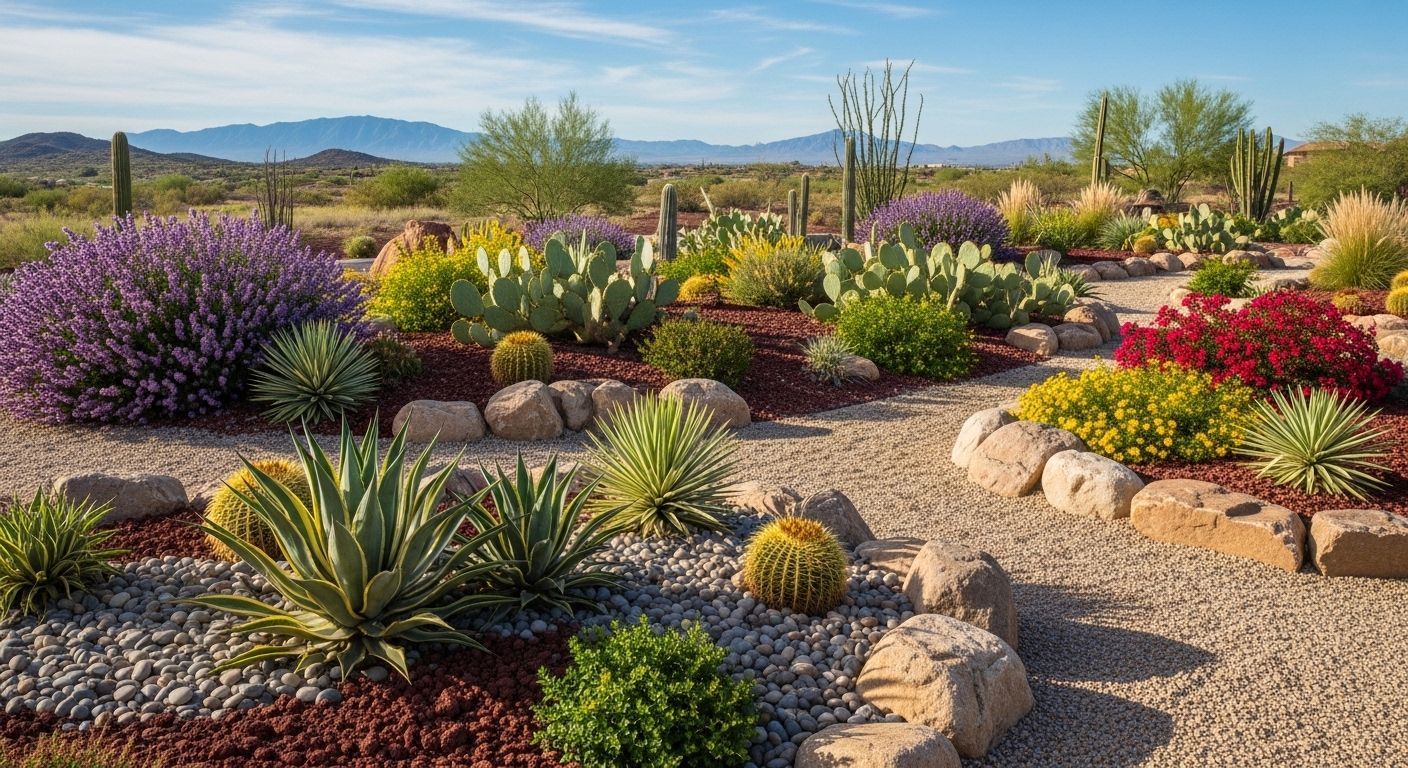
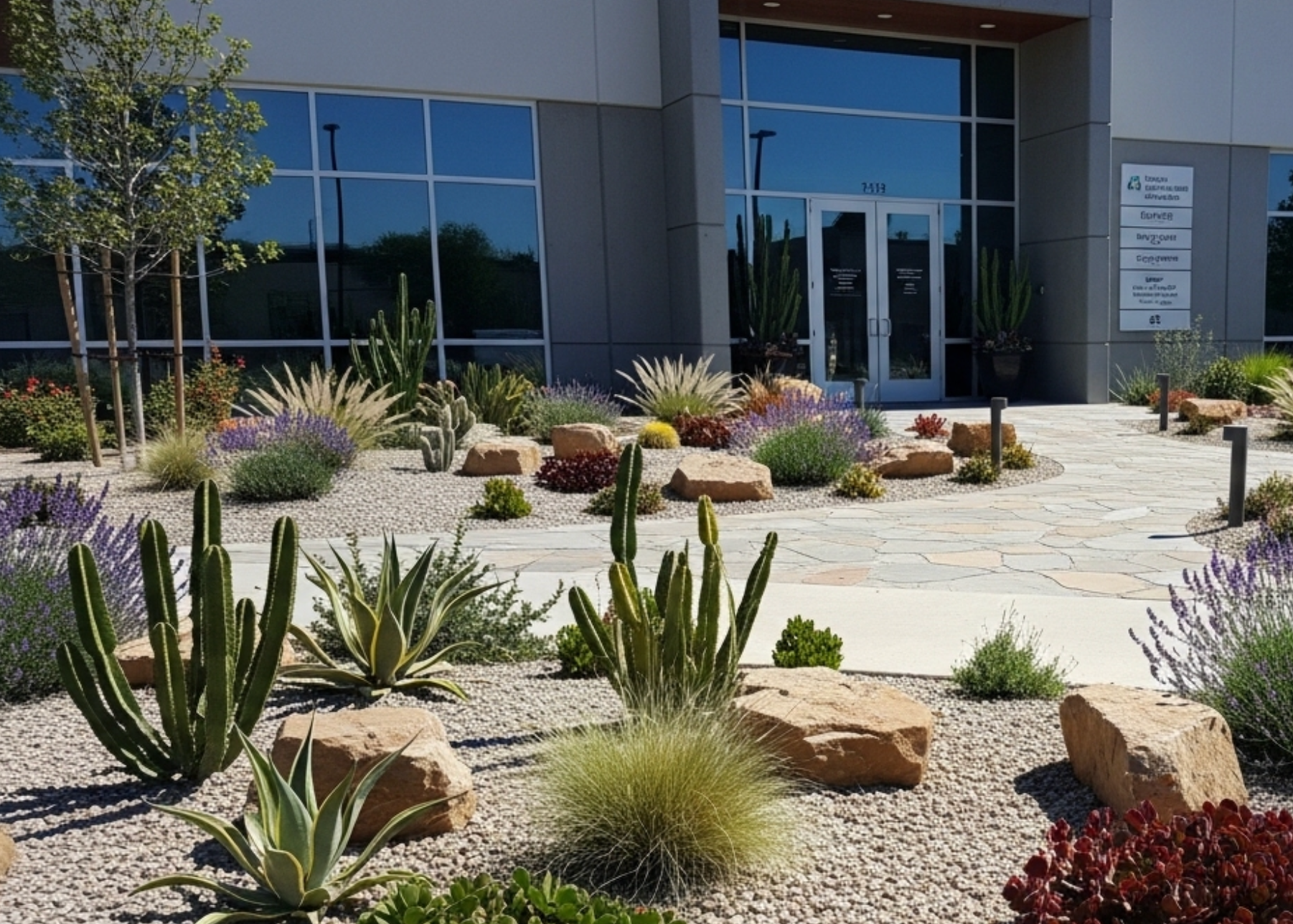
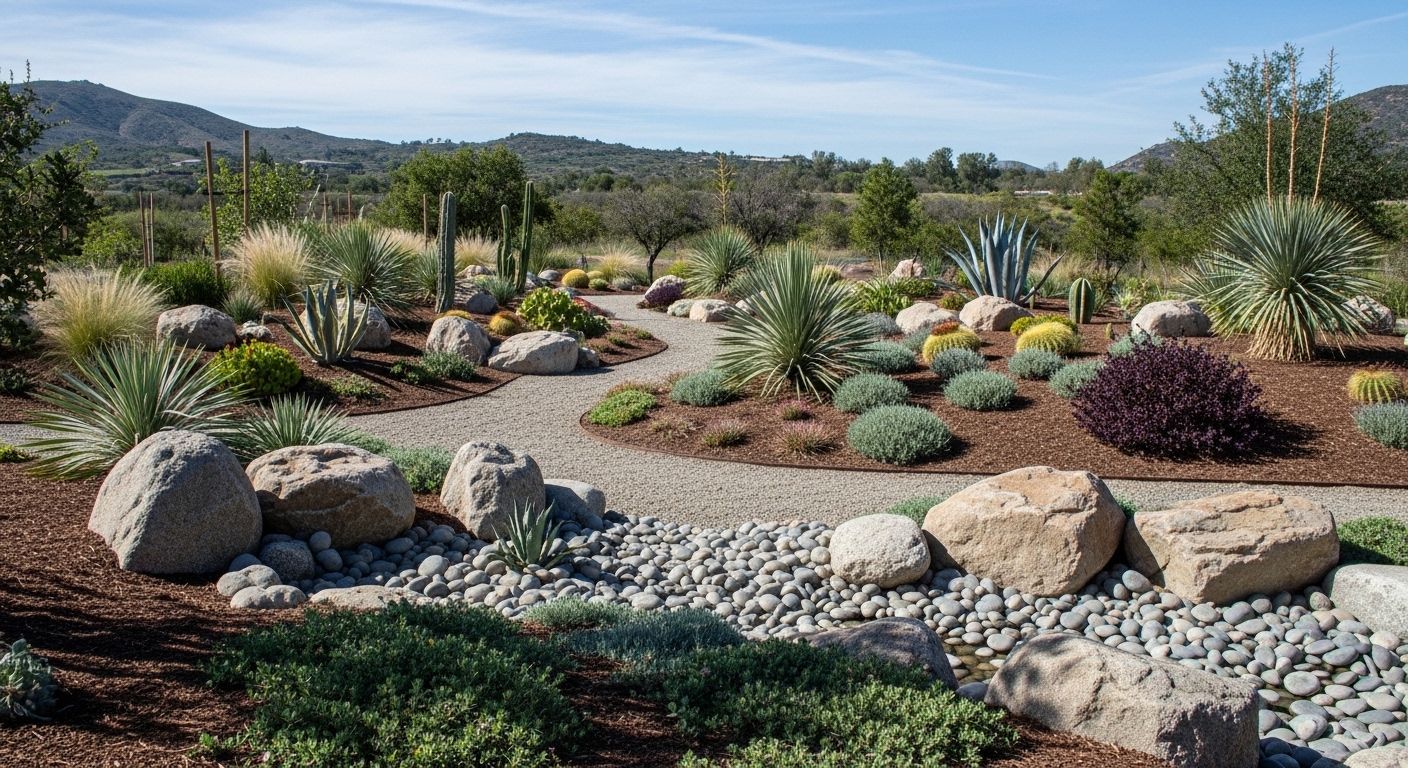
Built for Every Type of Commercial Space
We work across a wide range of commercial and public settings, including business campuses, retail and office properties, apartment and condominium communities, municipal parks, and public rights of way. Each type of space comes with its own considerations. A retail property needs strong curb appeal and durable plantings that hold up to heavy foot traffic near entrances, while a municipal park may prioritize pollinator habitat, shade coverage, and long term low maintenance performance across acres of open space.
Our process starts the same way for every commercial project: a full site assessment covering soil composition, drainage, sun exposure, and how the space is actually used day to day. From there, we build a native and adapted landscape plant palette suited to the property's specific conditions, drawing on detailed regional plant knowledge rather than a generic commercial planting template.
Lower Maintenance Without Sacrificing Appearance
One of the biggest advantages of commercial native landscaping is the reduction in ongoing upkeep. Native plantings generally require less mowing, less fertilizing, and less pesticide application than conventional commercial landscaping once established. Research from the Xerces Society and multiple university extension programs indicates that established native plantings can reduce the need for fertilizer and pesticide applications by up to 60 percent, since these species have evolved alongside local soil organisms and pollinators for generations. For property managers overseeing multiple sites, that reduction in maintenance frequency can translate into real savings across a landscaping contract.
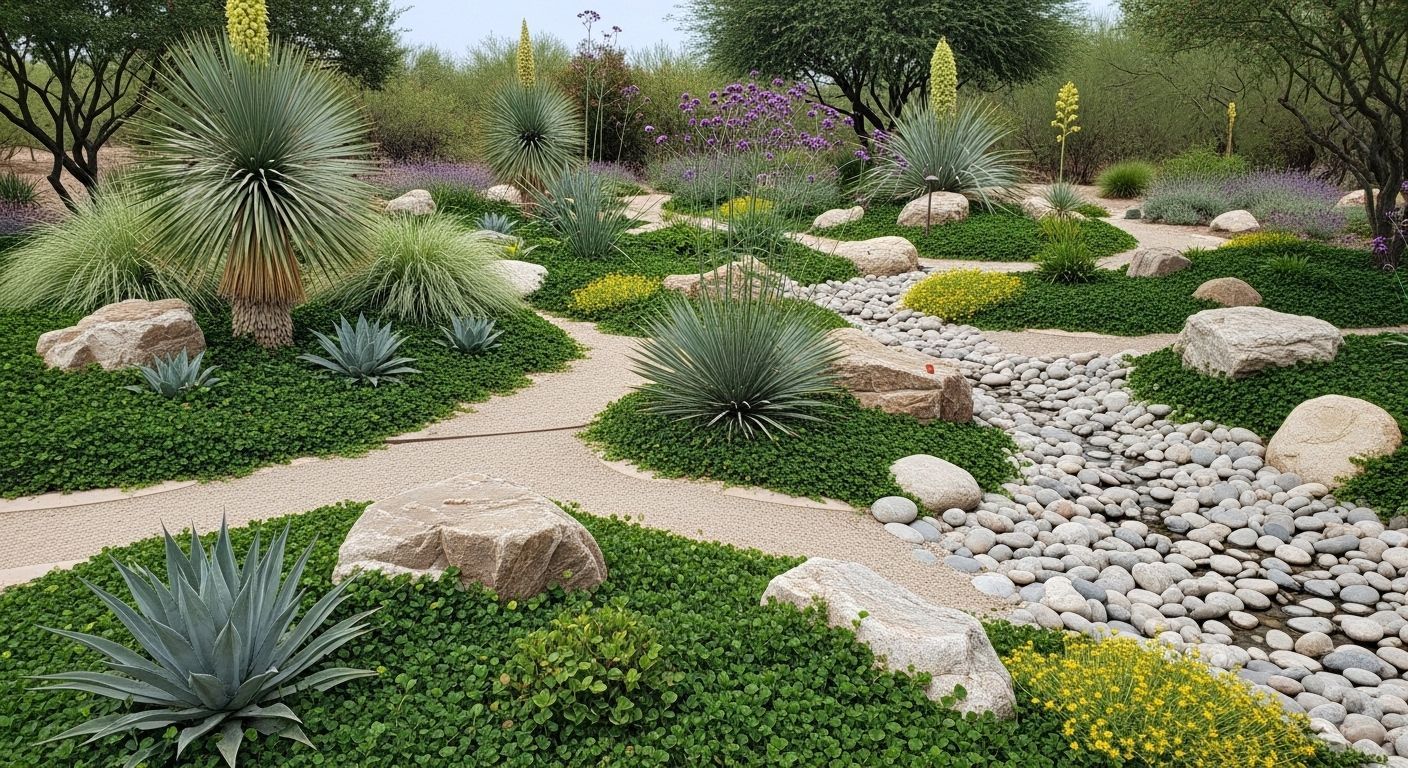
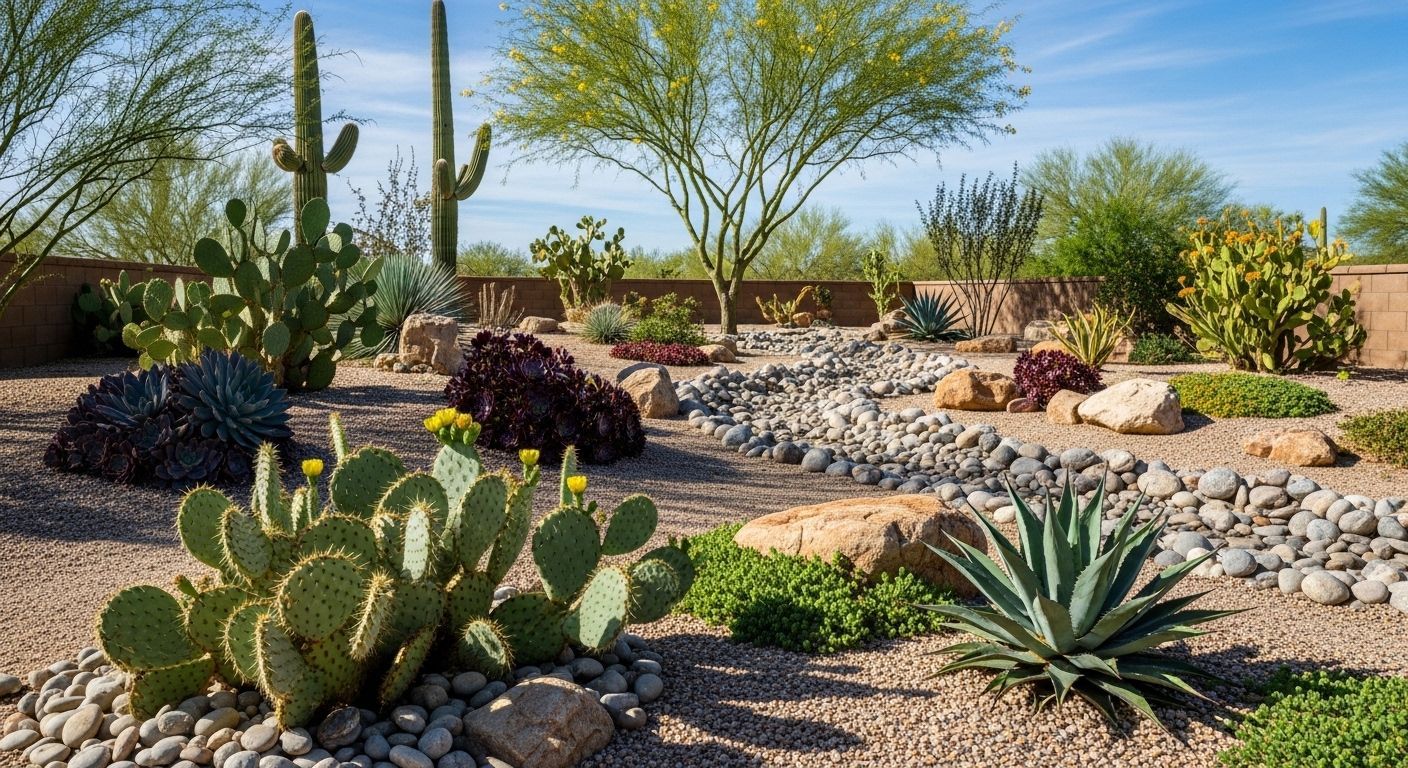
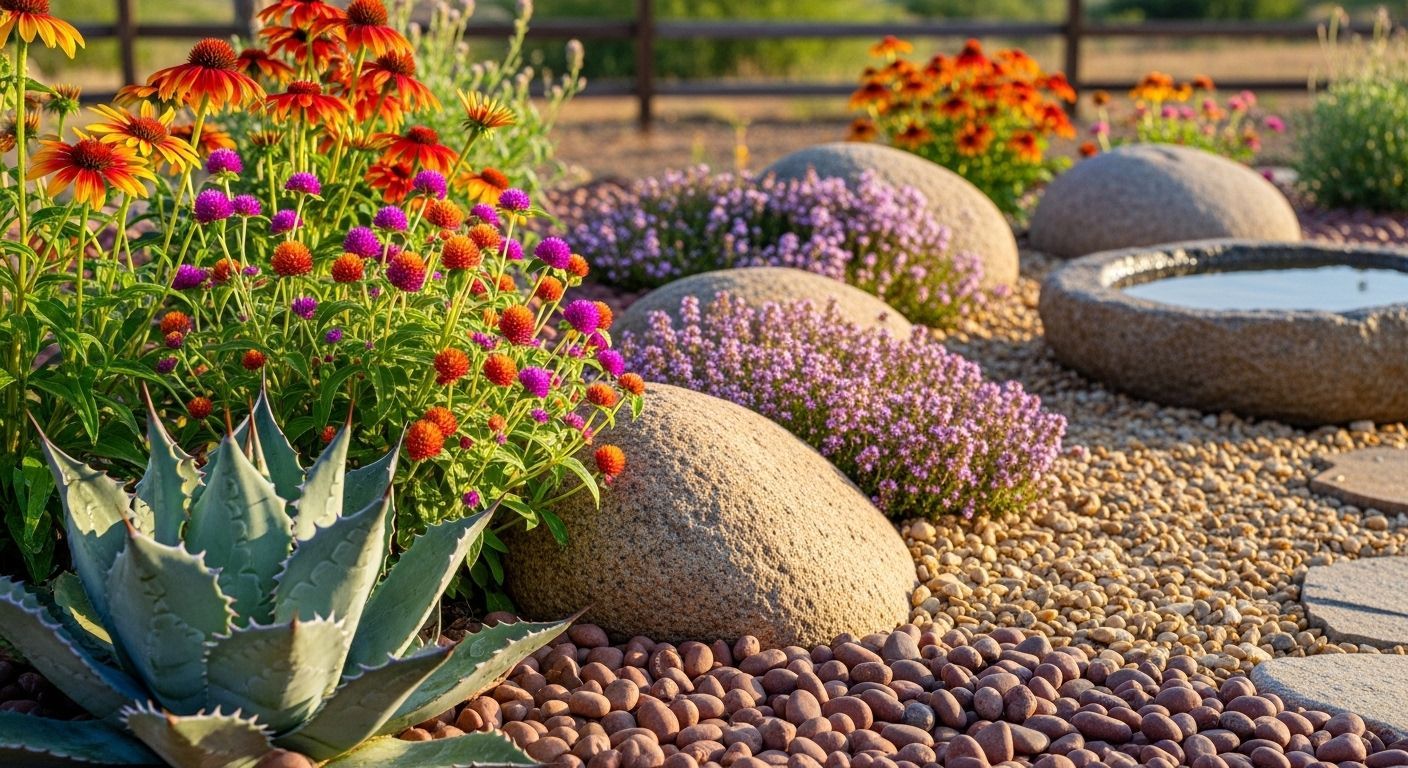
We also design with hardscaping in mind, incorporating durable pathways, defined bed borders, and appropriately placed mulch or rock to keep large scale plantings looking clean and structured with minimal seasonal intervention.
Meeting Sustainability and Regulatory Goals
Many municipalities and larger commercial clients are increasingly expected to meet sustainability benchmarks, whether through internal environmental policies or local stormwater and water use regulations. Native landscaping supports these goals directly, reducing irrigation demand, supporting pollinator populations, and improving stormwater absorption compared to traditional turf, which tends to shed water rather than retain it.